
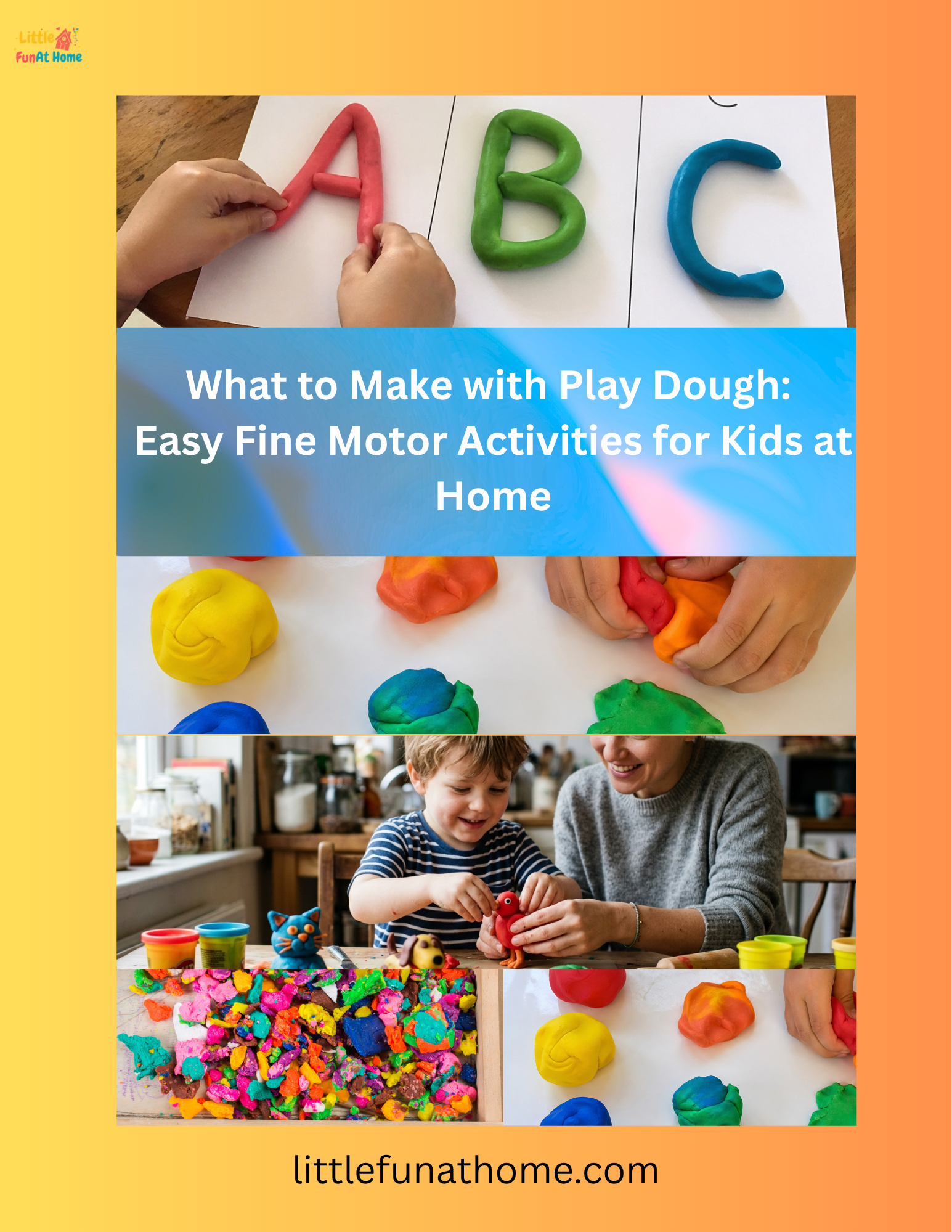
Play dough is a favorite activity for children and adults alike. Its bright colors and soft texture naturally attract attention, and it is hard to resist touching and shaping it.
For kids, play dough feels almost magical because they can mold it into endless shapes, objects, and designs in any color they choose.
Many families already know how to make play dough at home. One common question is what to make with play dough.
Another question is how to use it for learning. That is where creative play dough activities become so helpful.
In this blog post, I’m sharing a list of fun and educational playdough activities for kids that I prepared with my son. These simple ideas keep children happily engaged.
Why Play Dough is Important for Kids
Play dough is more than just a toy. It supports early development in several important ways:
Improves creativity and imagination–
Kids can create countless shapes and designs, helping to boost creativity and imagination.
Strengthens fine motor skills (important for writing) –
Rolling, squeezing, and kneading the dough builds fine motor skills.
These skills help with hand control and prepare little hands for writing.
If your preschooler is struggling to hold a pencil properly, learn what parents can do to help.
Supports early literacy and numeracy learning-
You can shape play dough into numbers and letters.
It can also form simple shapes. This supports early learning and recognition skills.
Enhances focus and concentration –
creative play dough activities can help improve kid’s focus, concentration, and problem-solving skills.
Encourages sensory exploration –
Its soft texture encourages sensory play through touch, movement, and hands-on exploration.
Easy Play Dough Activities at Home
Here are simple activities you can do at home without any special materials.
1. Alphabet Play Dough Activity
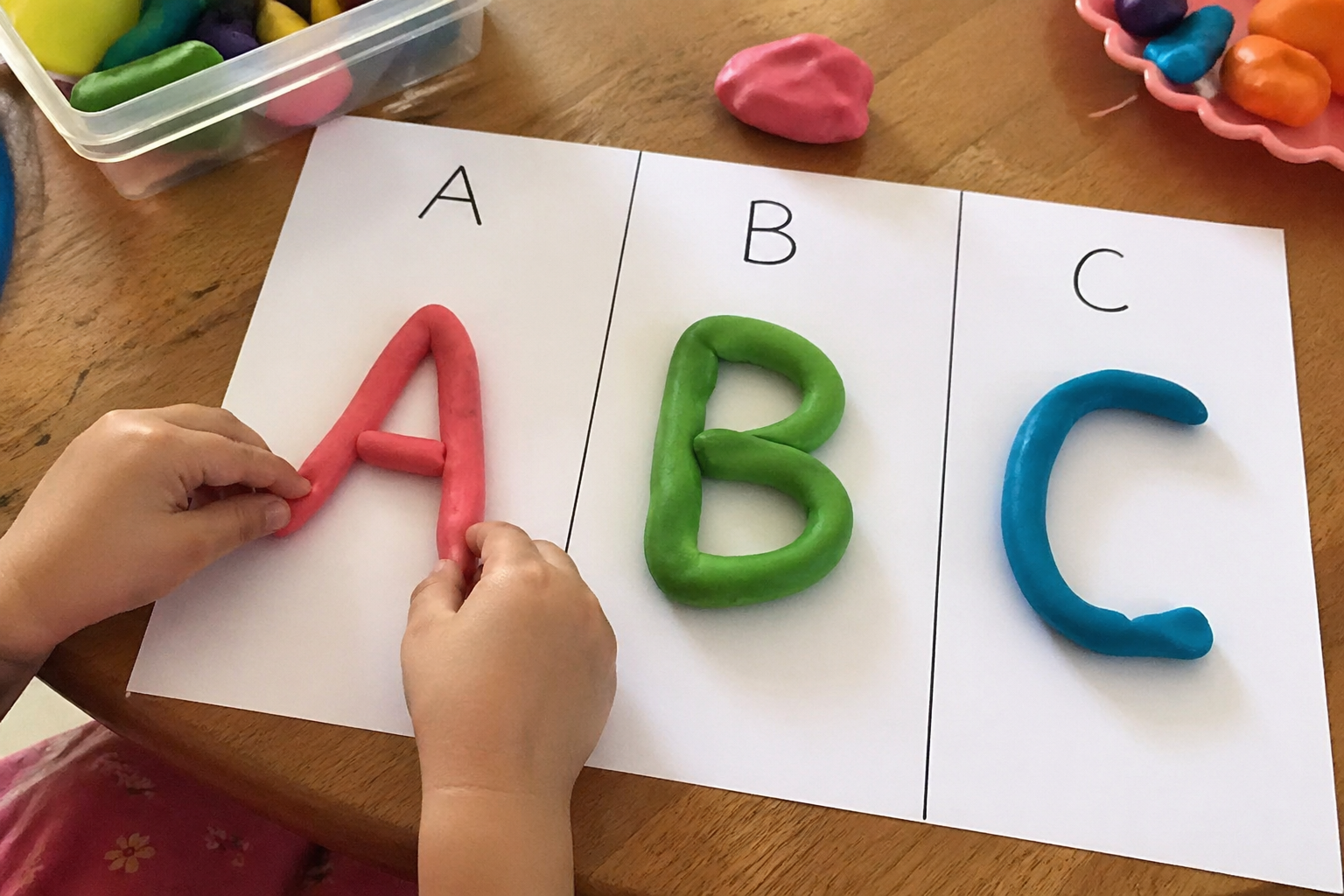
Help your kids learn letters using play dough.
How to do it :
- Write a letter on paper (example: A, B, C).
- Encourage your little one to roll the play dough and shape it into letters.
- Say the letter sound together, like: A says “Aa.”
Why It Helps :
- Builds letter recognition skills.
- Introduces early phonics and letter sounds.
Want more letter practice? Try our Alphabet Tracing Worksheet for Kids
2. Counting Play Dough Balls Activity
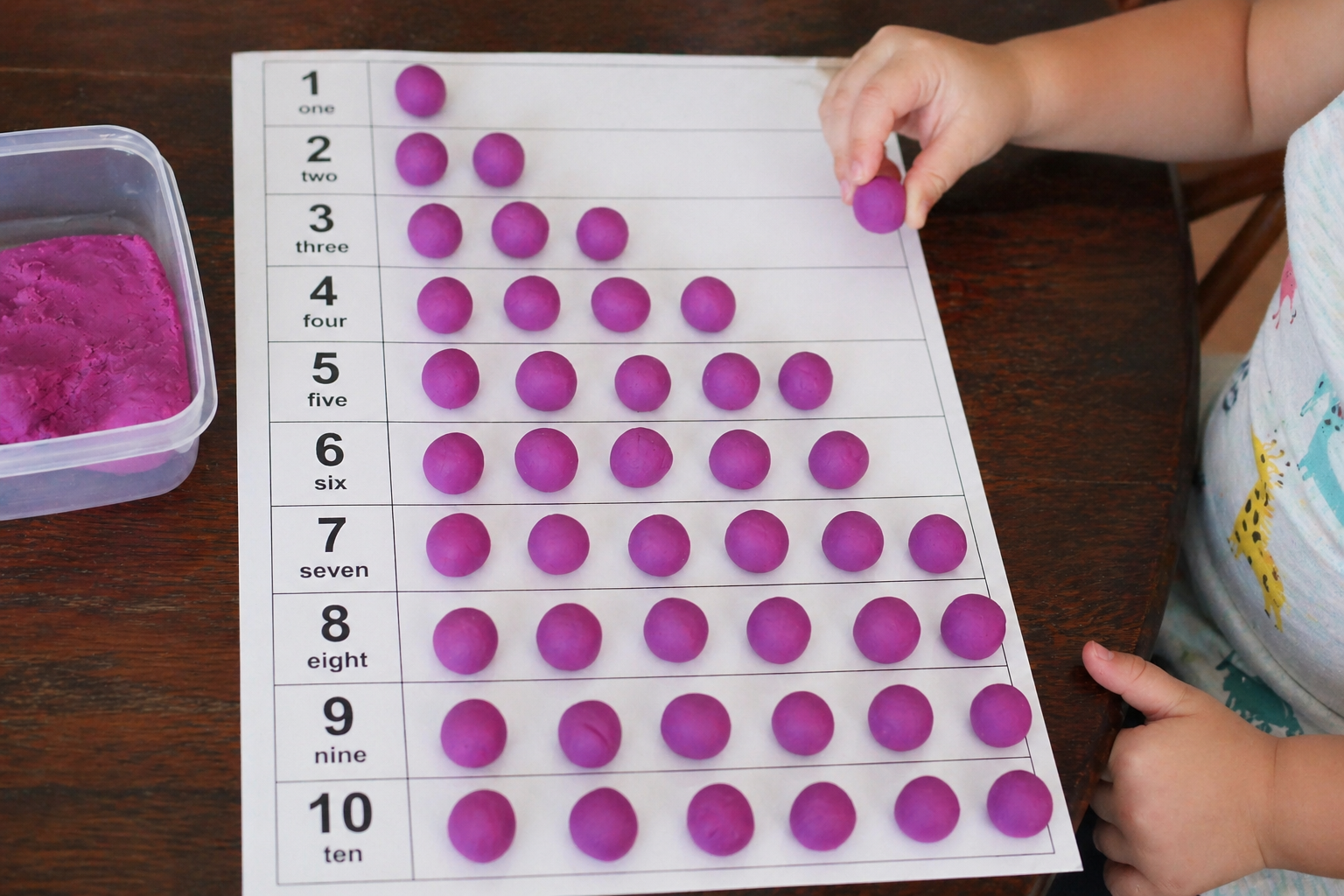
Help your child learn numbers and counting in a fun hands-on way with play dough.
How to do it:
- First, say the numbers from 1 to 10 clearly.
- Ask your child to make that many play dough balls for each number.
- For example: 1 ball, 2 balls, 3 balls … continue until 10 balls.
- Count the balls together as they make them.
- Repeat the activity regularly for better learning.
Why it helps:
- Children learn quickly by watching and listening.
- Repeating this activity helps them understand numbers and improve counting skills faster.
You can also continue learning with our Learning numbers worksheets & counting activities for preschoolers.
3. Color Mixing Fun
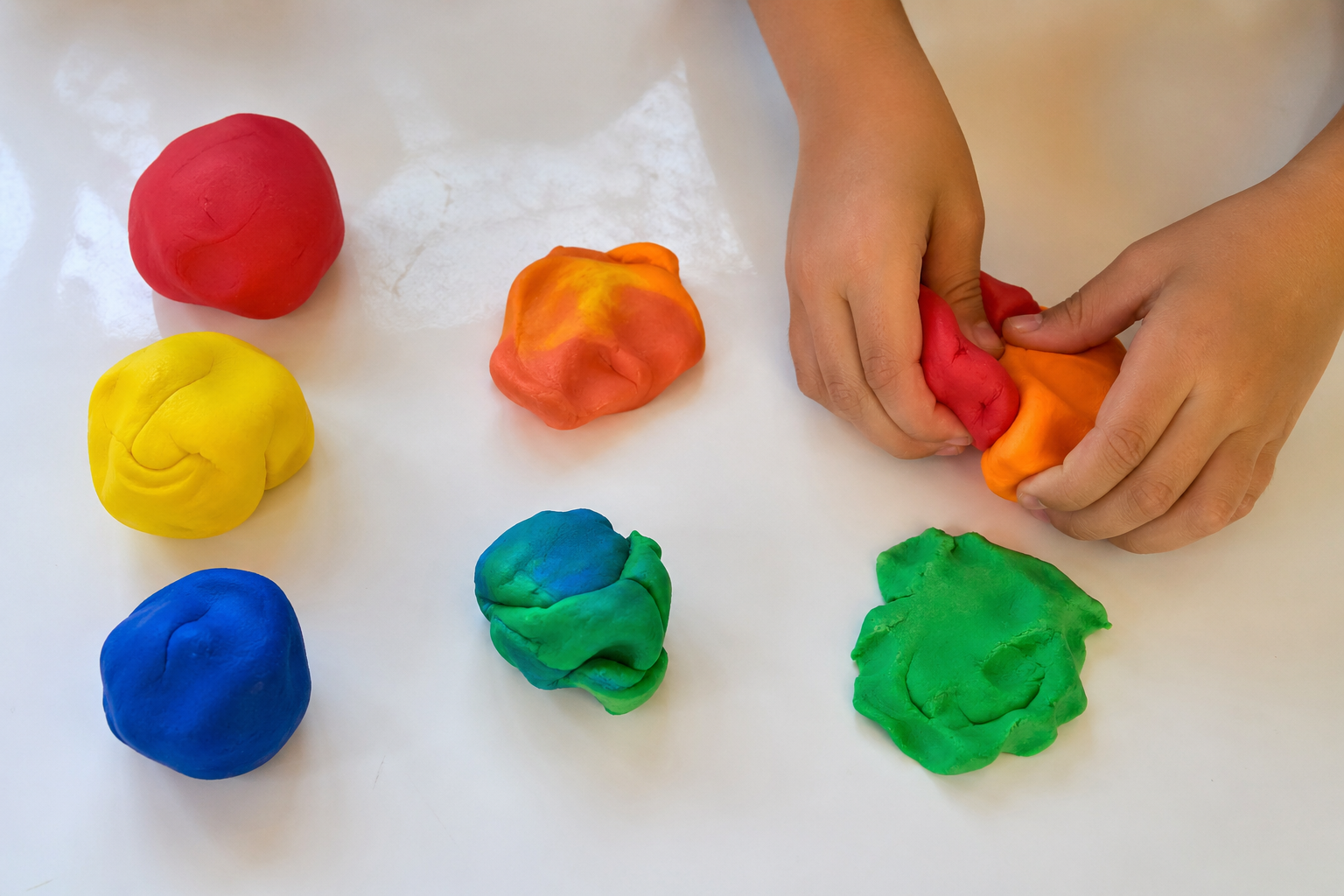
Teach colors in an interactive way.
How to do it:
Give red, yellow, and blue play dough
Let kids mix and see new colors appear
Why It Helps:
Color recognition and curiosity
Your child may also enjoy our Free Printable Coloring Pages
4. Animal Shape Making
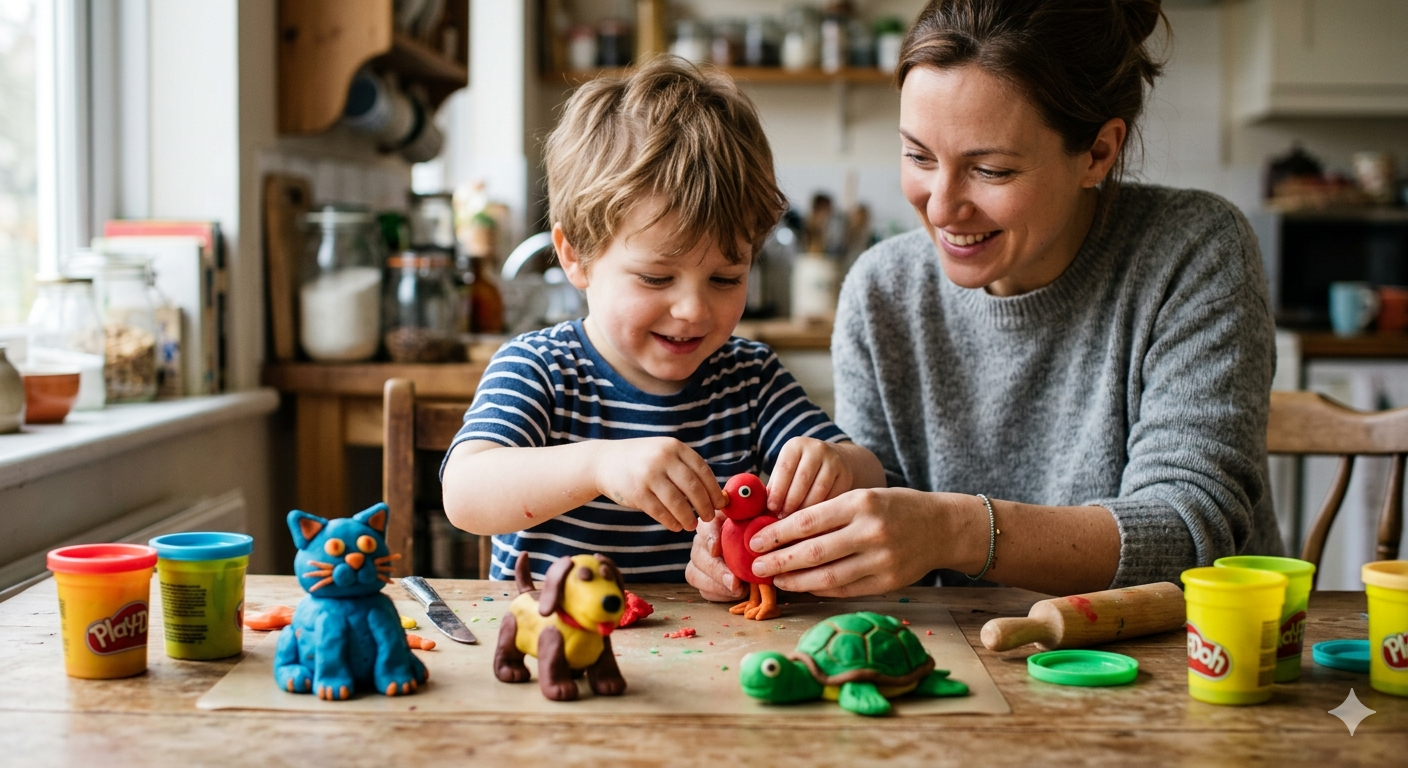
Encourage your child’s creativity by making animals with play dough. My son loves animals, and this has become one of his favorite activities.
We made different animals with colorful playdough. I saw a special sparkle in his eyes as he looked at each one.
He started identifying and naming the animals on his own, which made the activity even more meaningful.
How to do it:
- Make different animals together using play dough
- Name each animal while creating it
- Teach your child the correct animal names
- Show and imitate the sounds each animal makes
- Encourage your child to repeat the names and sounds
- Make it interactive and playful for better learning
Why It Helps:
- Helps children recognize different animals
- Encourages imagination and creativity
- Enhances sensory learning through hands-on play
5. Pretend Bakery Play
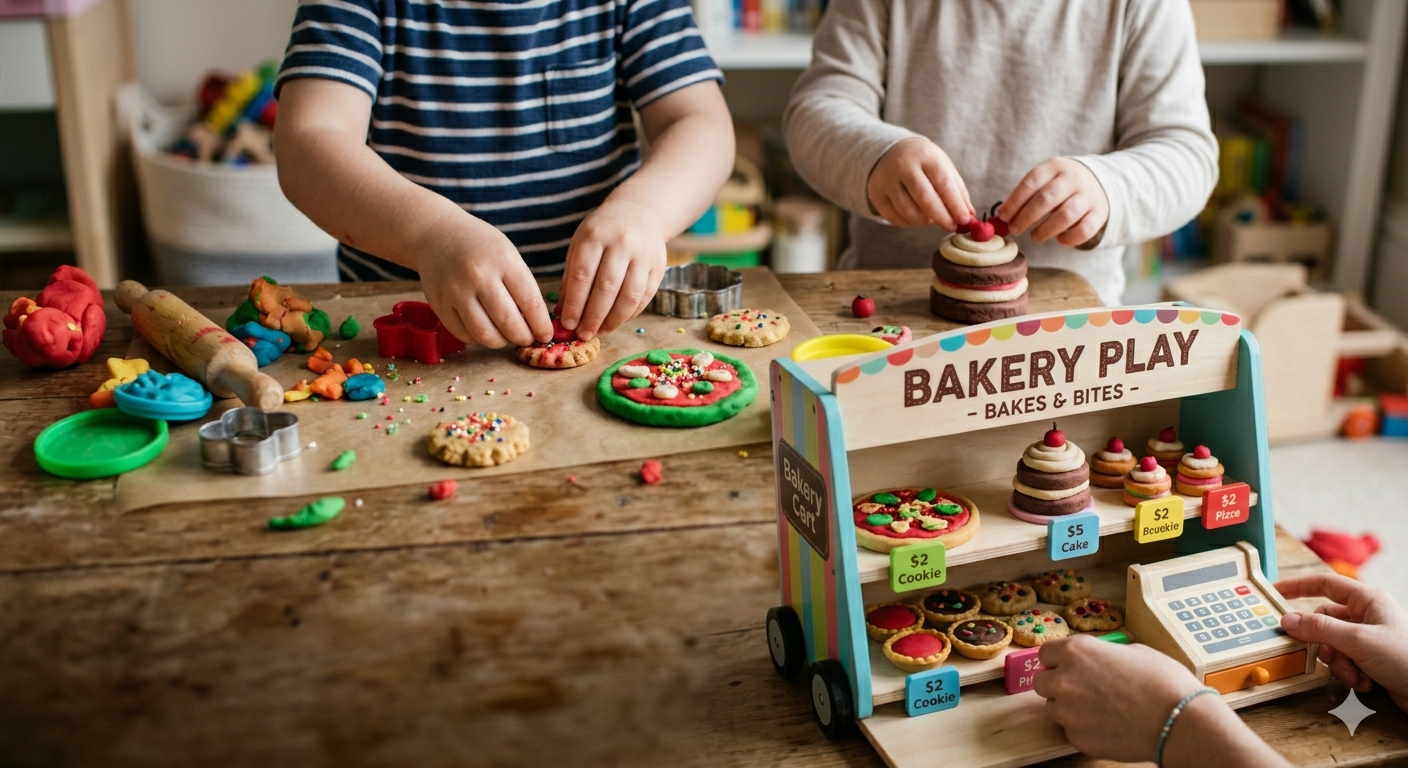
Turn play dough into food items.
How to do it:
- Make yummy-looking cookies, cakes, and pizzas with play dough
- Set up a little pretend bakery at home
- Take turns being the baker and the customer
- “Sell” and “buy” the food items using pretend money or fun conversations
Why it helps:
- This is such a fun way to get kids into role play
- It helps them learn simple social skills like talking, sharing, and taking turns
- You’ll see their imagination truly come alive as they pretend and interact.
- It also builds confidence as they “talk” like real little bakers and customers.
6. Teach basic shapes using play dough
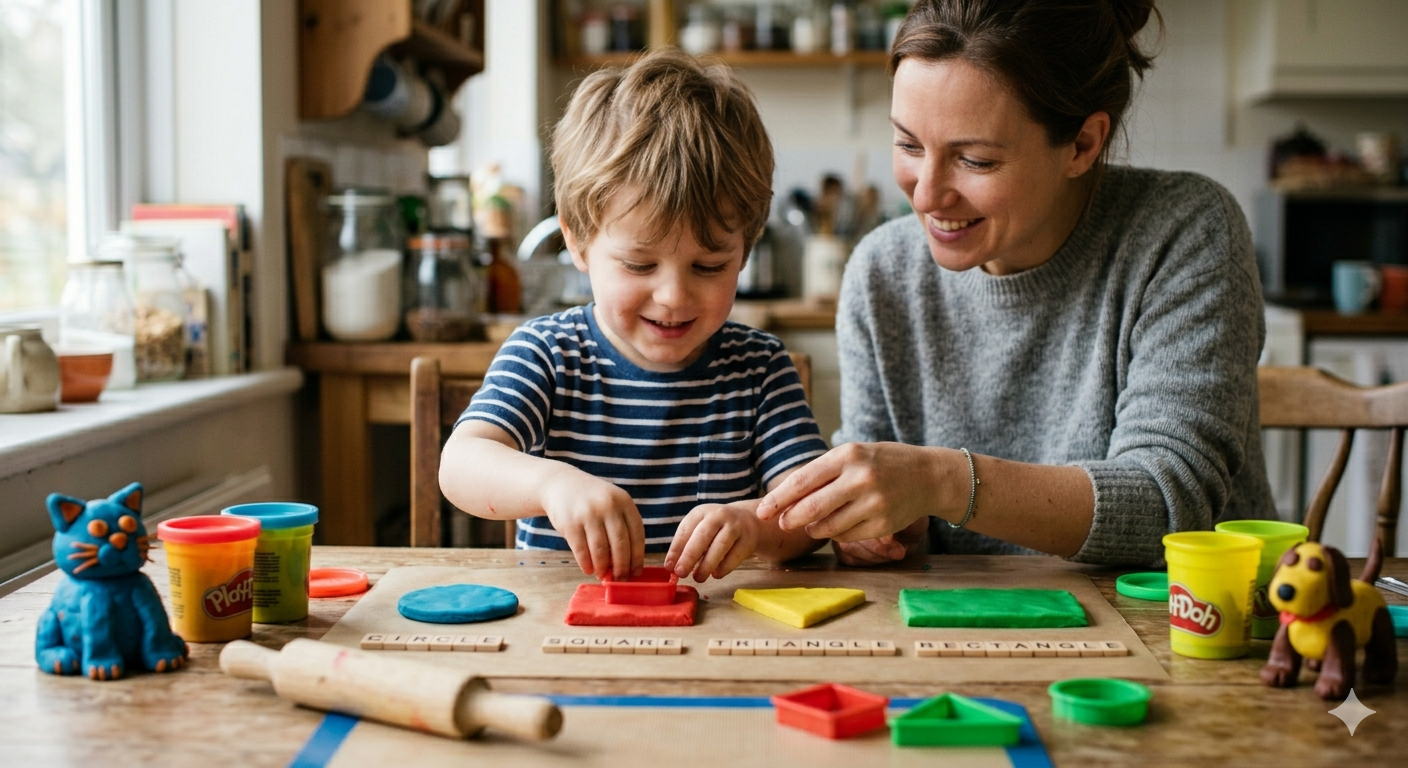
How to do it:
- Give your child different colored play dough (red, blue, yellow, green, etc.)
- Show them how to roll and shape the dough into simple shapes
- Help them make a circle, square, triangle, and rectangle one by one using shape molds or their hands
- Assign a different color to each shape (e.g., red circle, blue square)
- Say the shape name aloud while making it together
- Ask your child to repeat the name and color after you
- Let them try making the shapes on their own after practice
Why it helps:
- Shape recognition
- Color recognition
- Spatial awareness
- Early learning through hands-on play
For extra practice, download our Shape Tracing Worksheet for Preschoolers.
Tips for Parents
- Always supervise younger children
- Use soft, non-toxic play dough
- Keep sessions short (15–30 minutes)
- Encourage free play after structured activities
Bonus Idea: Theme-Based Play Dough Days
Make learning more exciting by choosing themes:
- Farm animals day
- Transport day (cars, buses)
- Nature day (flowers, trees)
- Seasonal themes (Halloween, Christmas)
Final Thoughts
Play dough is a powerful learning tool that turns everyday play into educational growth. With a few simple activities, you can help your child build creativity, focus, and early learning skills at home. You can also have fun together.
Start with one activity today and watch your child’s imagination grow!
Looking for more ways to keep kids engaged indoors? Explore 10 Fun Indoor Activities for Kids at Home.